Riff on Francis Murphy: Full Live Painting Session!
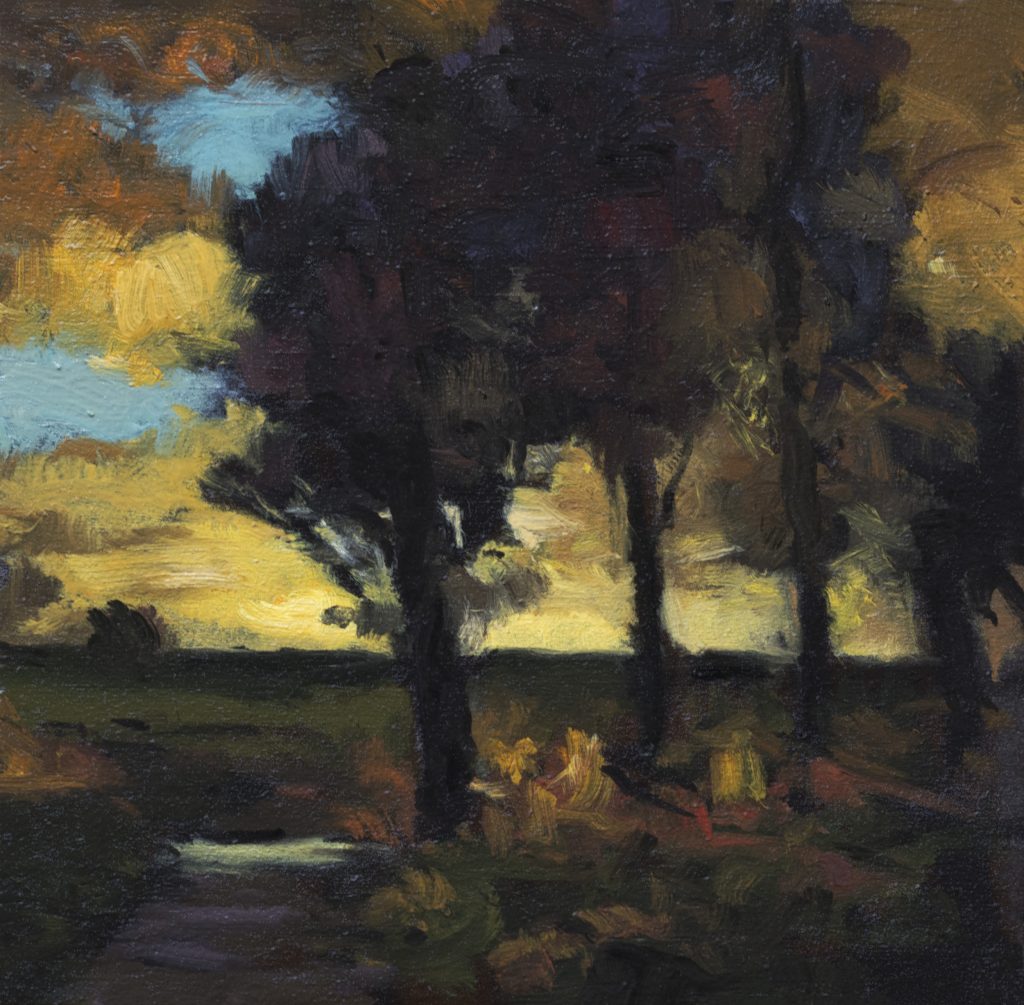
Join me as I create a tonalist riff inspired by Francis Murphy’s “Evening”
In the Substack studio pass area, I put up a study from 2021, a painting called “Evening” by Francis Murphy. It got me thinking, I really like that old painting. I’d like to do a riff on it. This was a faithful study back then. Today’s going to be a riff. I love the colors. I love so much about the painting itself.
The Board
This board’s been prepped since that time, practically a painting itself. You could just paint on it like this. I don’t paint on this dark color anymore, but I did for a while. That’s all on the channel from 2018, 19. Mostly texture.
This board’s been with me a long time. It’s been through a lot. You can see the preparation on it. Back then I was doing texture and then oil prep. I got away from painting on this dark partly because it doesn’t photograph very well. I have the tech now, so I can adjust.
Getting Started: Drawing and Brushes
I don’t need a grid. I have one, but I don’t need it. I’m doing my own imagining. I’ve been doing a lot of studies, which you don’t usually see on the channel. The drawing’s straightforward. I’ve got to make some adjustments as I go, but that’s the work. Drawing’s done.
I want a tiny brush with a bit more control. For a smaller painting like this, you need to account for the brush’s character. Too loose and you lose what you’re after. I’m going for the foliage brush, a long filbert. A little more broken in is what I need.
The Sky
This is pure tonalism. This is Murphy. This is the heart of Tonalism. Him and the nest were the two most pure tonalists.
When you paint on a dark board, you better make sure your colors have enough presence. Murphy glazed a lot, which you can see in the aqua tones in the sky. That’s always a giveaway.
There’s some texture on this board, and when you’ve got texture, you have to change your brush approach. You’ve got to bear down to get the paint into the nooks. You’ve got to be more strategic about your oil. Sometimes you’ve got to use a lot more oil to get the paint into the nooks.
I want some more presence there. Cadmium’s always present when you’re working with this kind of palette. It’s a bit too bright for that area, so I wipe some away because I don’t want to fight it.
That was a mistake. I was thinking, “I’m never going to get this red enough.” I went for the cadmium instead of the cadmium red hue, which meant I didn’t get the intensity I wanted there. I don’t want that to go that bluey gray. I want that more red in there. Get some intensity there. It carries through, which is cool.
Building the Composition
I’m working the foliage and the darks now. The question is whether we need to put any more darks in here. It’s very dark already.
I put too much red in that. I really like that more crayony color, but I’m going to have to bring in more white. See what I mean? I over-reddened it. I kind of like that gray out there. I could have done that with a raw umber or a tone.
Purple gives the smart payoff. We don’t think we need to bring in that red. We bring it in red. But you wanted to establish some of that, have the impact I thought it was going to. Probably a little white swipe would have been better.
What is all this? I’m not liking it. All that white there, I don’t want that. That is not the color I want. That is not the color at all.
That’s closer. There we go. This is pine, by the way. Now we’re going to brown it out. It’s too light.
That’s that flattish brown. It’s very umber-y. When I use these long filberts, I tend to rarely put a lot of emphasis on the side.
I did warn you this is a riff. These are some very skyholes, I believe. But they don’t come off as skyholes. That’s pretty good.
I think we’ll come in with a few more darks, but that’s good for now.
I like that a little more earthy. It’s whatever they are. Foliage.
Now orange. I want it like this ochre-y gray. No, I mean umber-y. It’s not even a color in his. He doesn’t even have a path really. It’s probably turned out to be more of a study than a riff, but I’m going to call it a riff anyway since I’m not that bothered with fidelity.
Finishing
We’re going to finish these up real quick. We don’t need to do much of this. I’ll be honest, I was just going to leave it.
I remember my friend coming in saying that we need a little black just in a few spots. Yes.
Well, that’s it. This is how you approach doing your own little tonalist studies from the masters. You pick something you love, you study it, you riff on it. You learn by doing.
Mike New Site | The Book | Gallery | YouTube | Members Area | My Music